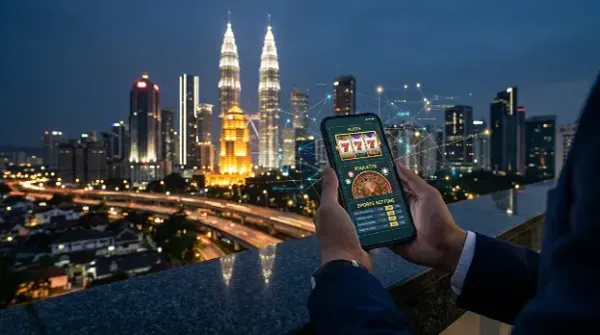
The State of Online Gambling in Malaysia: A Data-Driven Report for 2026
Online gambling is illegal in Malaysia, yet enforcement figures for 2026 point to a large, resilient market. What the laws say, what the crackdown shows and what the data cannot tell us.
Malaysia has taken a cautious, restrictive approach to gambling since independence. In 2026, legal gambling remains tightly controlled, limited to licensed land-based operators offering casino games, lotteries and horse racing. Online gambling is not licensed in any form. Even so, the activity has not disappeared: offshore operators based overseas still offer Malaysians sports betting and casino games online.
This report looks at the state of online gambling in Malaysia: the laws, how they are enforced, and what the available data does and does not show.
Malaysia's legal stance on online gambling
The main laws governing gambling in Malaysia are the Common Gaming Houses Act 1953 and the Betting Act 1953. Together they make licensed operators the only legal gambling providers and give the authorities power to shut down and prosecute illegal operators. These laws still govern gambling today, but they have a limit.
Because both Acts predate the internet, they do not specifically address online gambling. The authorities' actions, however, make the position clear: gambling websites and apps are routinely blocked and gambling promotions removed.
In August 2026, the MADANI government confirmed it had no plans to issue new gambling licences or permits. The Malaysian Communications and Multimedia Commission (MCMC) has also pledged investigative support and website blocking to help enforcement against unlicensed operators. The government and the communications regulator are aligned on restricting online gambling as far as possible.
Rising enforcement
The MCMC has blocked more than 1,778 gambling websites, significantly limiting the reach of offshore operators.
Much of its work targets social media. According to the MCMC, it submitted 470,593 requests to remove harmful content, of which 64% concerned gambling. Facebook accounted for 78% of the content, YouTube for 18% and TikTok for 4%. On 18 August, Communications Minister Fahmi Fadzil said platforms had removed 436,661 items following those requests, a compliance rate of about 93%, with gambling content making up more than half.
Two agencies lead the crackdown: the MCMC handles website blocking and cooperation with online platforms, while the Royal Malaysia Police shuts down illegal operations.
Officials have also raised concerns about sponsored gambling content. Deputy Communications Minister Teo Nie Ching said 15,519 pieces of gambling content were removed in the first 15 days of 2026, many of them sponsored posts designed to reach more people.
Individual players are not usually the main target of enforcement, but cases do reach the courts. In August 2025, a 44-year-old man in Kuching pleaded guilty to gambling online at a public eatery and was fined RM1,500, or one month in prison in default. Cases like this show that gambling online can be prosecuted.
The internet and social media as the main gateway
The government does not publish data on how many people gamble online, so there is no official measure of the market's size. The scale of enforcement, however, suggests a resilient market that keeps finding ways to operate. That is not surprising in a country where around 35.4 million people, about 98% of the population, are online.
According to DataReportal, 30.7 million Malaysians use social media, which remains a major channel for gambling links and promotions.
Offshore operators are the main providers of online gambling to Malaysians, and many rely on mirror websites and social media. They often support local payment methods and offer promotions aimed at Malaysian players. Blask, an iGaming market intelligence platform, lists Mega888, BK8, 918Kiss and KK8 among the brands popular with Malaysian players.
A further concern is that many offshore platforms do not verify players' ages at sign-up, often asking for identification only when a player tries to withdraw winnings. That means underage users can register and be exposed to gambling.
Licensed gambling in Malaysia
Licensed gambling in Malaysia is limited to land-based operators: a single licensed casino resort, state-licensed number forecast and lottery operators, and horse racing through the turf clubs. Sports betting is not licensed. Despite these legal options, many people turn to offshore operators to gamble online.
A common way for offshore operators to get around blocking is to create mirror websites with new addresses. The MCMC continually tracks these down and blocks them.
| Area | Position in 2026 |
|---|---|
| Legal gambling | Licensed land-based operators only |
| Licences | Controlled by the government; no new licences planned |
| Unlicensed gambling | Illegal and subject to enforcement and prosecution |
| Gambling websites and online promotions | Subject to blocking and removal |
| National online gambling revenue | No official figure |
The 2026 FIFA World Cup crackdown
Malaysian authorities typically step up gambling enforcement during major sporting events, and the 2026 FIFA World Cup was no exception.
Before the tournament began, the MCMC said it would intensify action against gambling websites, apps and content. The Royal Malaysia Police launched Ops Saga XI to target websites and apps promoting World Cup betting.
By the end of June, the operation had led to 293 raids and 331 arrests, 234 of them Malaysians and 97 foreigners. Police uncovered betting worth RM2.63 million and seized RM145,005.09 in cash. By July, the totals had reached 649 raids and 945 arrests, with RM35.15 million in betting transactions detected. Those figures, from a single operation, point to an active online betting market.
Payment checks as an enforcement tool
Malaysia also tries to discourage online gambling by scrutinising payments. Bank Negara Malaysia's anti-money laundering framework requires banks and other reporting institutions to take steps against suspicious transactions, and they may hold funds from unverifiable sources until the situation is clarified.
The framework does not set a minimum amount for these checks, so many transactions, including gambling-related payments, can be caught by them.
What the data shows, and what it does not
The scale of enforcement makes it clear that online gambling is treated as illegal in Malaysia. Operators face measures ranging from website blocking to arrests, and players can face charges, fines and even prison.
This report is based on government actions and announcements, not on market data. The government does not publish figures on online gambling and does not tax it, so there are no official numbers for:
- how many Malaysians gamble online;
- annual online gambling revenue;
- the market share of offshore operators targeting Malaysia;
- how much money is deposited with online or illegal operators.
Outlook
The evidence suggests the authorities have no intention of easing their stance on online gambling. Their actions in 2026 show a willingness to adapt their methods as the online landscape changes, and even licensed land-based operators are expected to keep their promotion low-key.
Online gambling in Malaysia is likely to remain an underground activity for the foreseeable future. For the authorities and offshore operators, it is a game of cat and mouse. For players, it carries a real risk of penalties.